

Details
Reduce Manual Work Between Applications
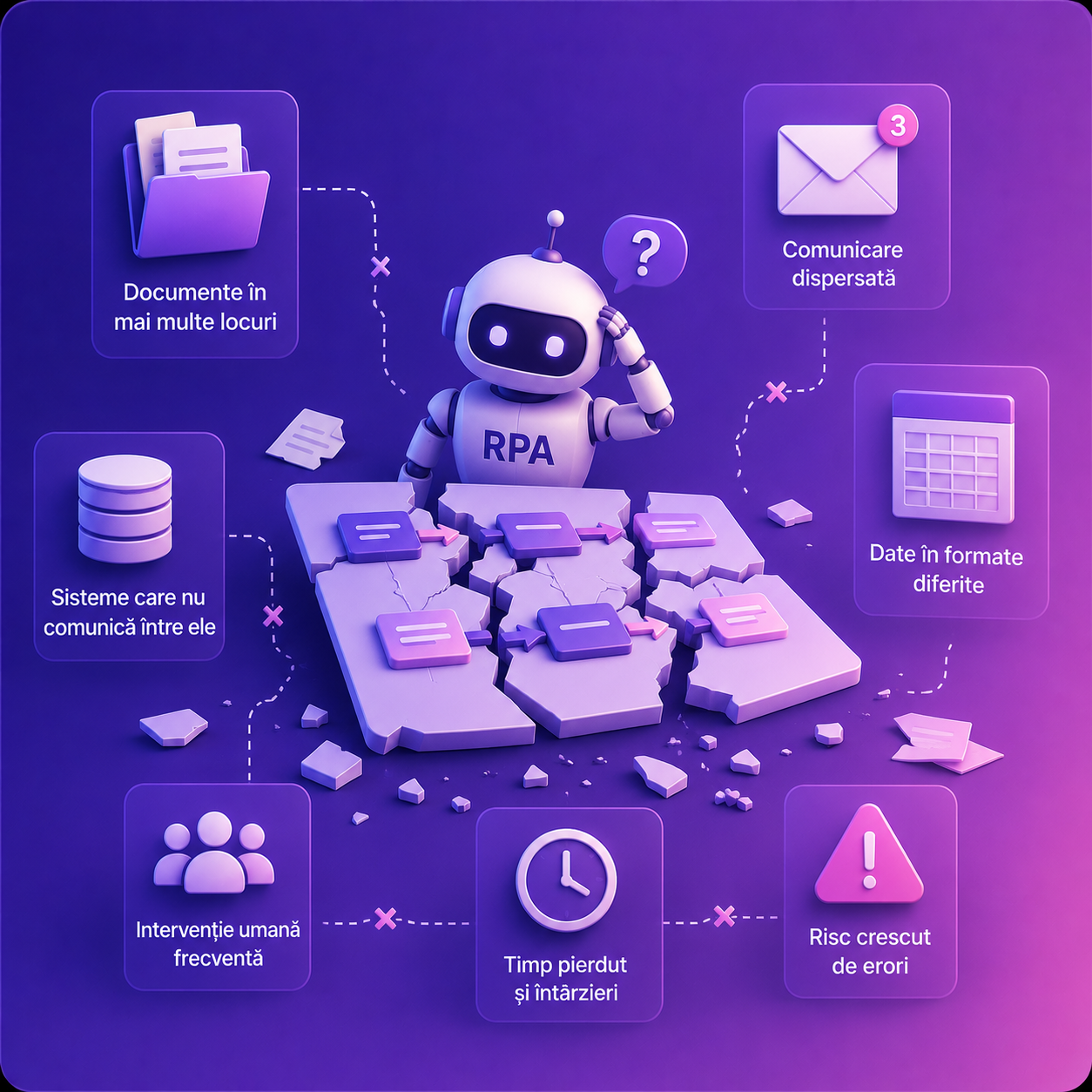
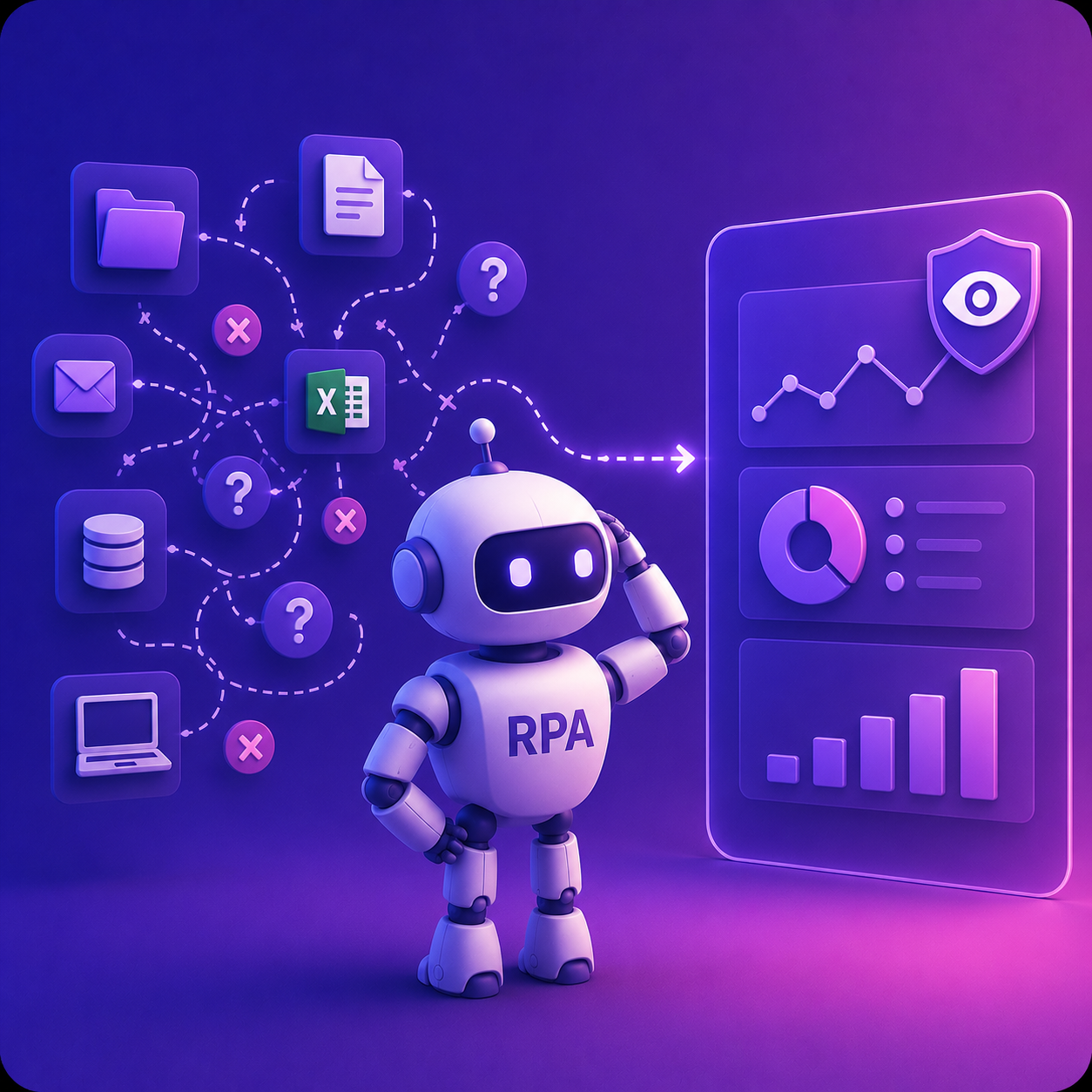
existence of processes where employees manually transfer information between multiple applications.
A software robot can perform these repetitive operations by interacting with existing systems according to the rules defined for the process. This allows RPA to reduce the volume of manual work without requiring every process to be supported by a complex application integration.
Use Cases
RPA can be used for repetitive and rule-based processes where users frequently perform the same operations in one or more applications.
Examples of Use
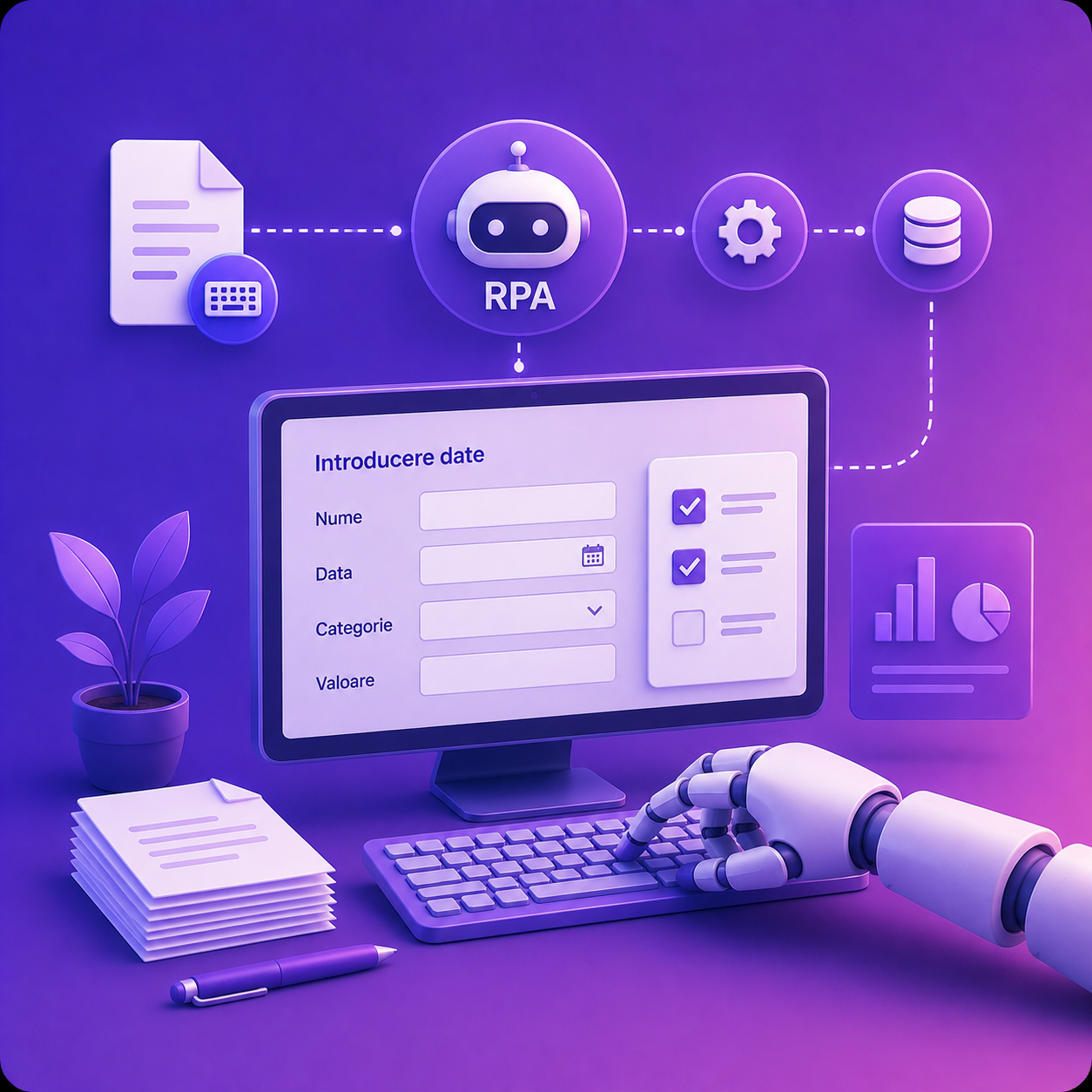
- Automated data entry
- Information transfer between applications
- Document processing
- Updating information in systems
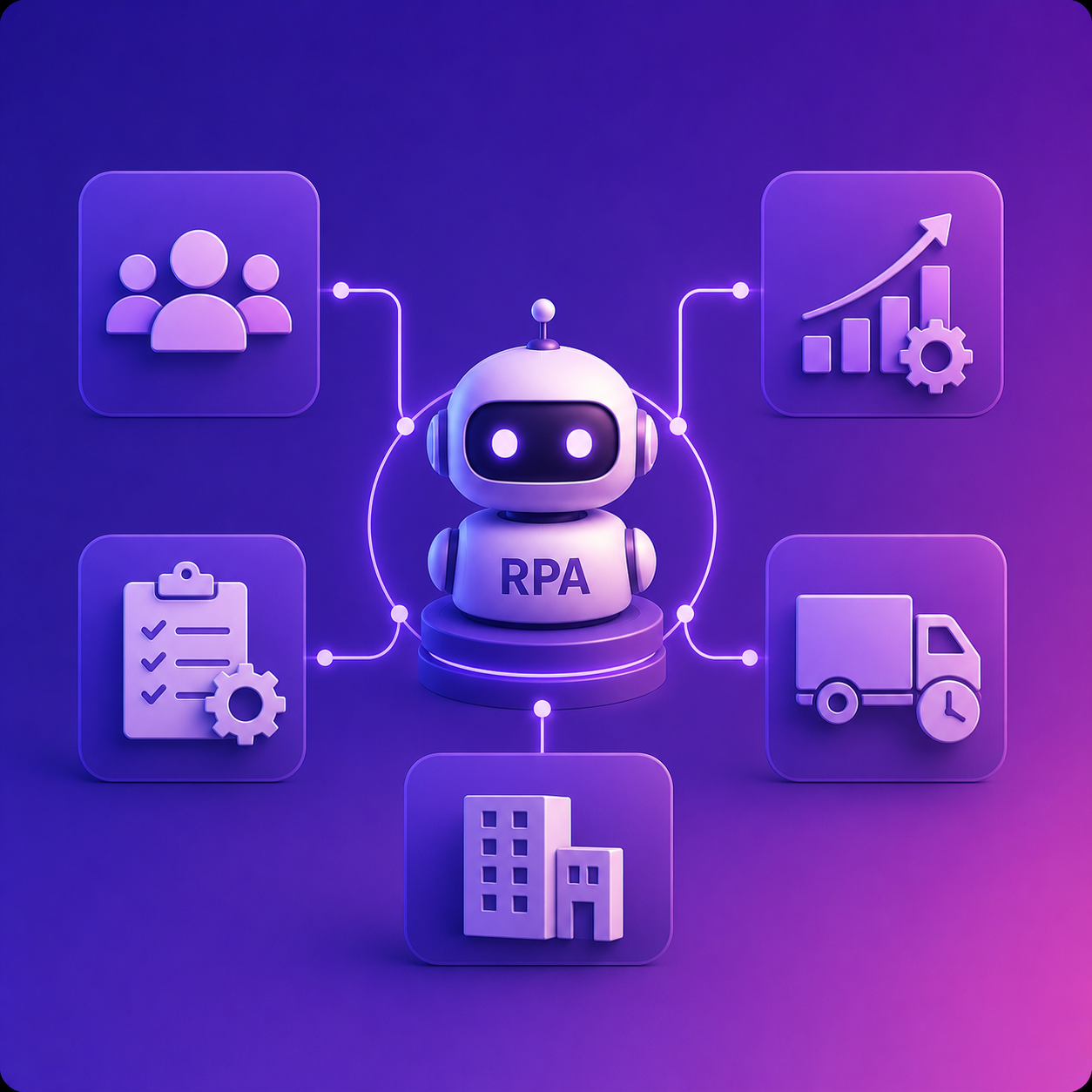
- Financial and accounting process automation
- Administrative process automation
- Processing information from files and documents
- Report generation and processing
- HR process automation
- Logistics process automation
- Execution of repetitive, rule-based activities
Connect Processes Without Replacing Existing Systems
RPA can be used to automate processes that involve applications already in use within the organization.
Software robots can interact with these systems and perform operations that were previously carried out manually by users. This approach allows organizations to automate processes without having to replace all the applications involved.
The goal is to reduce manual operations and create a more coherent workflow between existing systems.
Why RPA?
- Automation of repetitive activities
- Reduced manual data entry
- Automated information transfer between applications
- Automation of rule-based processes
- Reduced time spent on routine operations
- Use of existing applications and systems
- Automated document processing
- Faster and easier-to-manage processes
- Scalable automation across multiple processes
- Reduced reliance on manual operations